
Reflecting on her time as a participant within LGBT youth civil society, Fiona, a cultural activist and former youth project member, recalled:
“The real magic of BeLonG To, as I remember it in those early days, was how the young people in the group were centred, listened to and taken seriously – both in the regular meetings and on broader campaigns. We were treated as experts of our own experience, given decision-making roles in the organisation and encouraged to dream big about what changes we could make – culturally and policy-wise – to create brighter futures. What made BeLonG To a truly radical group was the solidarity created with other marginalised communities – for example, Travellers and asylum seekers – and their inclusion in campaigns.”
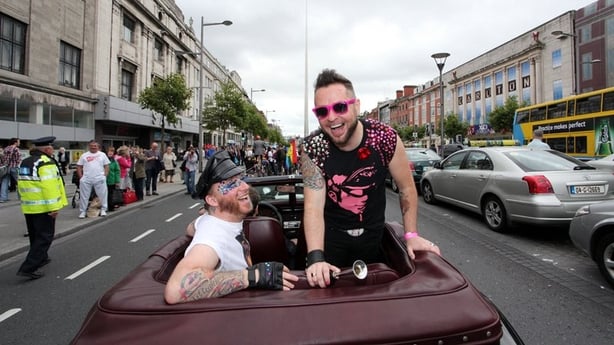
in 2010, with husband Jaime Nanci
This spirit of optimism underpinned much of the work. Campaigns moved beyond prevention of harm towards celebrating flourishing. The Growing Up Gay documentary, aired nationally, gave young people a platform to speak about their lives not in terms of pathology but of everyday hopes and fears. Parents and teachers who watched it were forced to confront a new truth: these were ordinary young people asking only to belong.
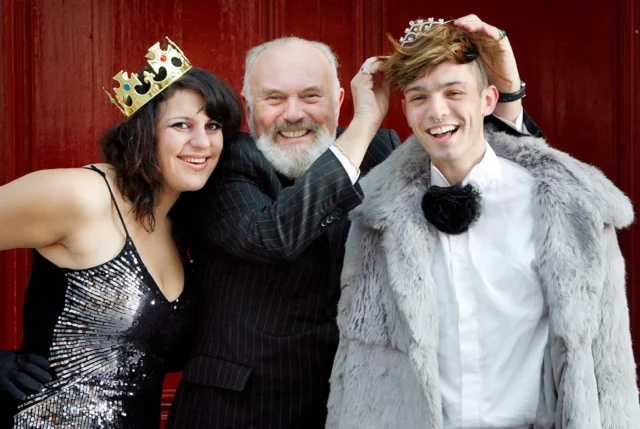
The Gay Prom, organised by BeLonG To in the early 2000s, embodied this narrative shift in joyful form. A safe, exuberant rite of passage, it allowed young people to attend with the partner of their choice, free from fear. What in another context might have been a routine teenage event became in Ireland a radical declaration: our joy is valid, our presence undeniable.
This optimism extended into schools nationwide through Stand Up! Awareness Week. Teachers and pupils were given resources to discuss homophobic and transphobic bullying openly. Posters appeared in corridors, lesson plans were shared, solidarity was voiced. For young people used to isolation, this visible support transformed classrooms, school yards, and communities.
Optimism did not deny violence – many lives had been lost to suicide or exclusion – but it insisted that joy was still possible. By centering hope, young people created a cultural shift that parents, educators and policymakers could not ignore. Optimism became not simply an emotion but a deliberate strategy: reframing queerness from shame to possibility, from stigma to celebration.
Alongside these cultural interventions came important advocacy in education and youth policy. Anti-bullying guidelines began, for the first time, to name homophobic and transphobic bullying as issues requiring explicit attention. Teachers were supported to challenge silence and create inclusive classrooms. Civil society worked in partnership with the Department of Education to produce resources that recognised LGBTQ+ identities as part of everyday life rather than as taboo subjects. This work built a foundation of legitimacy, establishing that queer youth had the same right to safety, recognition and flourishing as their peers.
The optimism of queer youth in Ireland was not about ignoring risk or pain. It was about insisting on possibility in the face of hostility.
The Safe and Supportive Schools model extended that vision further, encouraging a “whole school community” approach to inclusion. Rather than seeing queer youth as problems to be managed, schools were challenged to become places where diversity was visible and welcomed. This approach marked a significant departure from the culture of silence that had long dominated Irish classrooms.
Through these campaigns and policy interventions, Ireland began to imagine itself differently. A generation once invisible in education and policy was now speaking for itself, demanding recognition and creating futures that once seemed impossible. Optimism became both shield and sword: a way of surviving violence and grief, and a way of forcing society to dream bigger than its inherited prejudices.
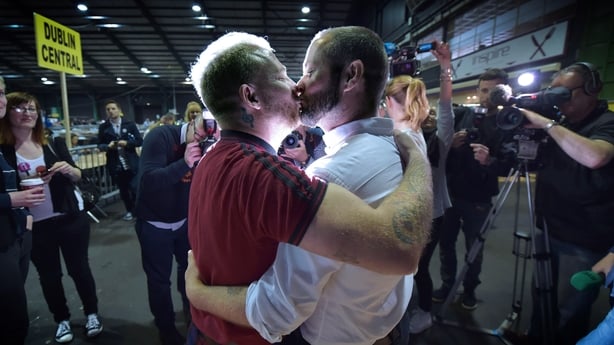
Marriage Equality Referendum Count Centre in 2015
That lesson matters now more than ever. Around the world, and increasingly in Ireland, we see the resurgence of forces determined to roll back LGBTQ+ rights. The far right targets trans young people with particular ferocity, and attempts are made to delegitimise the civil society organisations that defend equality. In such a climate, optimism might look naïve. Yet our history shows that optimism is most powerful when the headwinds are fiercest.
The optimism of queer youth in Ireland was not about ignoring risk or pain. It was about insisting on possibility in the face of hostility. It was about building alliances that shifted common sense, turning what was once dismissed as dangerous into what could no longer be denied. That kind of optimism remains essential today: informed by memory, sharpened by vigilance, but still daring to imagine a better future.